
Research
HÂþ»â€™s new Killam Memorial Chairs push boundaries in health, humanities, and agriculture

Four HÂþ» researchers are set to embark on the next chapter of their scholarly careers with strong momentum behind them as Killam Memorial Chairs. Read more.
Featured News
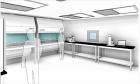
Wednesday, June 24, 2026
Led by HÂþ», BioLabs East will build a GMP — Good Manufacturing Practice — facility in Nova Scotia, producing vaccines and cell therapies for clinical trials while strengthening Canada’s biomanufacturing capacity and innovation ecosystem.
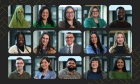
Thursday, June 25, 2026
A reimagined OpenThink cohort moves beyond blogging, testing podcasts and social media to broaden impact, connect with new audiences, and amplify how Dal research informs public dialogue and policy.
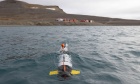
Thursday, June 18, 2026
HÂþ» robotics and underwater acoustics researcher Dr. Mae Seto is working with Defence Research & Development Canada to develop intelligent autonomous sensing systems that can extend the reach of the Canadian Armed Forces in the Arctic and help Canada protect its sovereignty in remote, harsh maritime environments.
Archives - Research
Wednesday, November 27, 2024
U.S. President-elect Donald Trump's proposals for massive tariffs on Canadian goods has spooked many. Dr. Brian Bow explains what it could mean for Canada.
Wednesday, November 27, 2024
A look at some of the latest publications and creative work emerging out of Faculty of Arts and Social Sciences, from books about the daughters of immigrants and Canadian exceptionalism to a philosophy professor's foray into stand-up comedy.
Friday, November 22, 2024
Award-winning journalist Doug Saunders and celebrated political scientist Dr. Debra Thompson visited Dal this week to dig into a question on many minds right now: What does Donald Trump’s re-election as U.S. president mean for the trajectory of democracy worldwide?
Thursday, November 21, 2024
PhD candidate Jamil Muradov unlocked new perspectives in his research on treating brain trauma thanks to a Killam International Research Award that took him to Leipzig University in Germany.
Thursday, November 21, 2024
Dal biologists have identified a microbe — T. haligoni — found in the Bedford Basin near Halifax that could help scientists better understand the health of the ocean.