
Research
HÂþ»â€™s new Killam Memorial Chairs push boundaries in health, humanities, and agriculture

Four HÂþ» researchers are set to embark on the next chapter of their scholarly careers with strong momentum behind them as Killam Memorial Chairs. Read more.
Featured News

Wednesday, June 24, 2026
Led by HÂþ», BioLabs East will build a GMP — Good Manufacturing Practice — facility in Nova Scotia, producing vaccines and cell therapies for clinical trials while strengthening Canada’s biomanufacturing capacity and innovation ecosystem.
Thursday, June 25, 2026
A reimagined OpenThink cohort moves beyond blogging, testing podcasts and social media to broaden impact, connect with new audiences, and amplify how Dal research informs public dialogue and policy.
Thursday, June 18, 2026
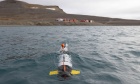
HÂþ» robotics and underwater acoustics researcher Dr. Mae Seto is working with Defence Research & Development Canada to develop intelligent autonomous sensing systems that can extend the reach of the Canadian Armed Forces in the Arctic and help Canada protect its sovereignty in remote, harsh maritime environments.
Archives - Research
Protecting our health, oceans, and future: Dal innovators celebrated at 22nd annual Discovery Awards
Monday, November 18, 2024
Dust explosions, how pathogens jump from animals to humans, and cancer patient empowerment programs are just some of the innovative research advances that were recognized at the 22nd annual Discovery Awards.
Thursday, November 14, 2024
Learn more about Dal's improvement in Human Biological Sciences and its other best-ranked subjects in the 2024 Global Rankings of Academic Subjects.
Thursday, November 14, 2024
Three Dal faculty members were named finalists for this year's Public Impact Award, recognizing researchers whose work has helped improve the lives of Nova Scotians. What does it mean to have a public impact? We asked them.
Thursday, November 14, 2024
In the last episode of Sciographies for this season, get to know Karen Hudson, a Dal alum and pioneering leader in education, committed to breaking down barriers and inspiring future generations.
Tuesday, November 12, 2024
Researcher Sophie Watts harnessed her training in Dal's OpenThink program to discuss bold ideas in the realm of genomics. Learn more and apply by Nov. 26 if you'd like a chance to join OpenThink's 2025 cohort.