
Research
HÂþ»â€™s new Killam Memorial Chairs push boundaries in health, humanities, and agriculture

Four HÂþ» researchers are set to embark on the next chapter of their scholarly careers with strong momentum behind them as Killam Memorial Chairs. Read more.
Featured News

Wednesday, June 24, 2026
Led by HÂþ», BioLabs East will build a GMP — Good Manufacturing Practice — facility in Nova Scotia, producing vaccines and cell therapies for clinical trials while strengthening Canada’s biomanufacturing capacity and innovation ecosystem.
Thursday, June 25, 2026
A reimagined OpenThink cohort moves beyond blogging, testing podcasts and social media to broaden impact, connect with new audiences, and amplify how Dal research informs public dialogue and policy.
Thursday, June 18, 2026
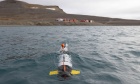
HÂþ» robotics and underwater acoustics researcher Dr. Mae Seto is working with Defence Research & Development Canada to develop intelligent autonomous sensing systems that can extend the reach of the Canadian Armed Forces in the Arctic and help Canada protect its sovereignty in remote, harsh maritime environments.
Archives - Research
Thursday, May 2, 2024
Hundreds of members of the Dal community converged on the Weldon Law Building last week for a day of learning, connection, and serendipity.
Wednesday, April 24, 2024
A new $4.3 million NSERC Alliance-Mitacs Accelerate Grant will support a partnership between the Atlantic First Nations Water Authority and HÂþ» to help the organization in its mission to deliver world-class drinking water and treatment guided by Indigenous knowledge and values.
Wednesday, April 24, 2024
The research team behind the international analysis, including Dal's Dr. Tony Walker, found a clear link between the world's top producers of branded plastic and plastic waste and determined that companies producing single-use consumer goods disproportionately contributed to the problem.
Tuesday, April 23, 2024
Fining companies that flout environmental regulations is an effective strategy, if the penalties are severe enough.
Friday, April 19, 2024
A team of Dal chemical engineering students worked with 2 Crows Brewing to explore ways to store some of the carbon dioxide produced during the brewing process.