
Research
HÂþ»â€™s new Killam Memorial Chairs push boundaries in health, humanities, and agriculture

Four HÂþ» researchers are set to embark on the next chapter of their scholarly careers with strong momentum behind them as Killam Memorial Chairs. Read more.
Featured News
Wednesday, June 24, 2026
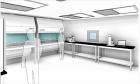
Led by HÂþ», BioLabs East will build a GMP — Good Manufacturing Practice — facility in Nova Scotia, producing vaccines and cell therapies for clinical trials while strengthening Canada’s biomanufacturing capacity and innovation ecosystem.
Thursday, June 25, 2026
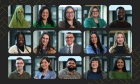
A reimagined OpenThink cohort moves beyond blogging, testing podcasts and social media to broaden impact, connect with new audiences, and amplify how Dal research informs public dialogue and policy.
Thursday, June 18, 2026
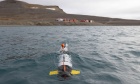
HÂþ» robotics and underwater acoustics researcher Dr. Mae Seto is working with Defence Research & Development Canada to develop intelligent autonomous sensing systems that can extend the reach of the Canadian Armed Forces in the Arctic and help Canada protect its sovereignty in remote, harsh maritime environments.
Archives - Research
Wednesday, June 12, 2024
The Faculty of Agriculture and the Fujian Agriculture and Forestry University are establishing a jointly run college in China that builds on more than 20 years of programming partnerships that have trained more than 1,000 students.
Wednesday, June 12, 2024
HÂþ» scaled new heights against nearly 2,000 other universities in this year's rankings, placing in the top 20 globally for its work in support of life below water, top 30 globally for zero hunger, and top 50 for life on land.
Thursday, June 6, 2024
Warmer groundwater is harmful for the rich array of life found underground – and for the many plants and animals who depend on groundwater for their survival. A global study looks at these changes and what impact this could have locally.
Tuesday, June 4, 2024
HÂþ» advanced 23 places from last year in the latest QS rankings, landing at 275 worldwide out of 1,503 institutions ranked.
Wednesday, May 29, 2024
Dal partners with industry leader to create a new artificial intelligence and healthy aging research chair and lab.