
Research
HÂþ»â€™s new Killam Memorial Chairs push boundaries in health, humanities, and agriculture

Four HÂþ» researchers are set to embark on the next chapter of their scholarly careers with strong momentum behind them as Killam Memorial Chairs. Read more.
Featured News

Wednesday, June 24, 2026
Led by HÂþ», BioLabs East will build a GMP — Good Manufacturing Practice — facility in Nova Scotia, producing vaccines and cell therapies for clinical trials while strengthening Canada’s biomanufacturing capacity and innovation ecosystem.
Thursday, June 25, 2026
A reimagined OpenThink cohort moves beyond blogging, testing podcasts and social media to broaden impact, connect with new audiences, and amplify how Dal research informs public dialogue and policy.
Thursday, June 18, 2026
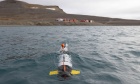
HÂþ» robotics and underwater acoustics researcher Dr. Mae Seto is working with Defence Research & Development Canada to develop intelligent autonomous sensing systems that can extend the reach of the Canadian Armed Forces in the Arctic and help Canada protect its sovereignty in remote, harsh maritime environments.
Archives - Research
Wednesday, January 15, 2025
Researchers have joined forces with Zambian health-care professionals to create the Mfuwe Epilepsy Foundation, with a focus on improving epilepsy care in rural Zambia where health infrastructure is limited.
Wednesday, January 8, 2025
Now that Justin Trudeau has agreed to step down as Liberal leader, possible contenders to replace him must weigh their ambitions for the position against a still-bleak electoral outlook for the federal party. Dal’s Scott Pruysers explains how it could all play out.
Monday, January 6, 2025
Working with communities to understanding the social acceptability of shellfish farming is the key to developing sustained aquaculture activities.
Friday, December 20, 2024
A new lithium-ion EV battery material being studied by HÂþ» researchers lasts for 10 times more charge-discharge cycles compared to a conventional battery, potentially powering cars for eight million kilometres.
Thursday, December 19, 2024
Life-changing research, award-winning students, a historic fundraising campaign, cultural milestones — 2024 was a year to remember. Revisit some of our biggest stories of the year.