
Tucked away in basements and household cubbies in African Nova Scotian communities across the province are fragments of a long-overlooked history.Ìý
Many of these documents, photographs, recordings, and other materials — often causally passed down from one generation to the next — lie dormant, some ending up on the curb despite the potential value they hold for African Nova Scotian communities.
“These are really precious items, but people are not really sure what to do with them or even how to maintain them properly,â€� says Jalana Lewis, director of African Nova Scotian Community Engagement at HÂþ».Ìý
These are really precious items, but people are not really sure what to do with them.
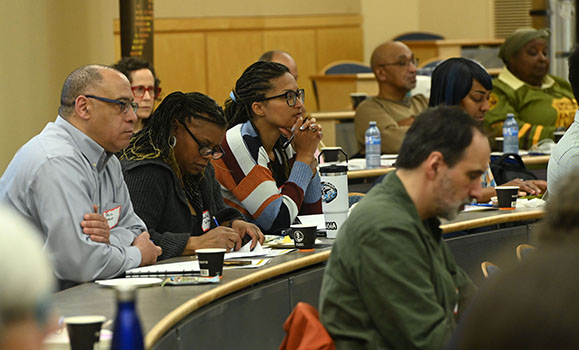
¶Ù²¹±ô’s African Nova Scotian StrategyÌýAdvisory Council and invited leaders of cultural centres and community members to campus last month to explore how to work more closely together to preserve these African Nova Scotian items.
Lewis says we risk losing the materials otherwise — and with them, stories often forgotten or underrepresented in existing public archives.
“Making sure that it lives somewhere — and we know where it is — is so important,� she says. “We couldn’t necessarily rely on other institutions to do that for us in the past."
Listen, learn, share
Michelle Williams, an associate professor in the Schulich School of Law and co-chair of the ANS Advisory Council, said the idea to bring people together arose organically as new archival materials kept surfacing as part of the African Nova Scotian Research Ethics project.
“The purpose, really, is to listen, learn, and share — to have a dialogue about African Nova Scotian archives, looking at the present but also imagining the future for us that way,� she said.
Some of this work has been underway for decades already through organizations such as the , the , and the .
Andrea Davis, executive director of the Black Loyalist Heritage Centre in Birchtown, N.S. — one of the original 52 land-based Black communities in the province — spoke about how her organization's collections help honour and safeguard the .
She said her centre's collections — including the Black Loyalists in Canada: Autonomy, Advocacy, Community collection — empower descendants such as herself and inspire others to appreciate this lesser-known history.Ìý
"In a moment when Black history is often limited to a few notable heroes, the items in this collection showcase the fact that from the moment of their arrival in Canada and onwards, numerous Black Loyalists told their own stories and advocated for their rights through written petitions, recorded testimonies, and other remarkable social and legal documents," she explained.Ìý

Davis spoke as part of one of the day's panels, Understanding The State of African Nova Scotian Archives. Other sessions centred around gathering input from community members on questions such as how to support people with materials, what collaborations can move the work forward and what a future African Nova Scotian Community Archive might achieve.
We're just starting the conversation.
Lewis says an important issue emerging as part of these discussions has been how to break down walls and engage with community. Workshops, exhibitions, and other activities are part of that, she says.
"I hope that people left feeling optimistic about the future of African Nova Scotian archives," she says. "And I hope people felt like they've been heard and their feedback is valued. We're just starting the conversation."